A bat-eared fox walking through low flowering scrub.

About

The long way round.

The long way round.

The long way round.

The short version

I am a photographer who went to Africa to learn to guide, and stayed long enough to work out what I actually wanted to build.


I qualified as a field guide in South Africa in 2022. Fourteen months in the field followed: six at Marataba, eight on the road across southern and eastern Africa in a Land Cruiser.

I am a photographer who went to Africa to learn to guide, and stayed long enough to work out what I actually wanted to build.


I qualified as a field guide in South Africa in 2022. Fourteen months in the field followed: six at Marataba, eight on the road across southern and eastern Africa in a Land Cruiser.

Photography

What I photograph.

What I photograph.

I do not have a fixed style. What I keep coming back to is behaviour, and animals shown in the place they live rather than isolated from it. If a photograph says something about the animal’s character, or how it fits where it is, I am happy with it.

Most of that comes from getting low. Eye level with a wader, or a tortoise, or the bat eared foxes in the Central Kalahari. A fish eagle hunting, photographed from water level rather than looking down at it.

A southern yellow-billed hornbill on the ground in dry grass.

Photography Fieldcraft

I spend a lot of time on birds. Getting close to one takes fieldcraft and patience: staying still, staying quiet, waiting. Do that and you see behaviour you would otherwise miss entirely, and colour that is not visible until the bird moves.

Midday light is usually written off. It is not the light I would choose, but it is what you often have, and there are ways of working with it. High key, where the colours can go quite pastel. Or black and white, which handles the harshness rather than fighting it.

A lilac-breasted roller perched on a bare twig.

The kit

What I shoot with.

What I shoot with.

I started in 2012 with a Canon EOS 450D and a cheap 100 to 300mm. Hooked immediately, and limited almost as quickly. In 2015 I bought a 7D Mark II and put it on a 100 to 400 L, which I still own and still use, and that was the first time I could shoot what I actually wanted to.

I was dubious about moving from DSLR to mirrorless. I was wrong. The autofocus on the current bodies means far more keepers, and more to the point it means I am watching what the animal is doing instead of fighting the camera.

African wild dogs moving across open grassland under a full moon.

Now it is an R5 Mark II and a 400mm f2.8, the best piece of glass I have owned. An R7 as backup with the 100 to 400, which with the crop factor and an extender is a serious birding setup. A 24 to 70mm f2.8 for closer subjects and landscapes.

I shoot manual, setting shutter and aperture for the subject and the conditions and letting auto ISO carry the rest. Mostly off a bean bag or a gimbal head.

Gimbal heads mounted to a vehicle are the thing I would tell anyone to try. If there is a leopard up a tree above you, holding heavy glass on it is hard work and you end up rushing. On a gimbal the lens stays where you put it and you can wait for the moment.

Cattle egrets flying to roost, silhouetted against an orange sky.

Editing.

I use Lightroom and I like it. Masks are where most of the value is: radial and linear filters, subject and background selections, the brush. They are an advanced feature and they trip people up, but used properly they let you touch less of an image than the basic sliders would, because you can be exact about which part you are lifting or darkening.

What I am not trying to do is turn a photograph into something it was not. The point is to stay faithful to what was in front of the camera and use the edit to bring out the character of the animal and the place. Cropping does a lot of that. So does colour, and where the viewer’s eye lands.

I like a vignette. Sometimes barely there, sometimes heavy. The aim is to dial it in without anyone noticing, because it quietly pulls the eye to where you want it. If you can see the vignette, it is too strong.

I edit with a pen, on an iPad or a phone. Editing is part of making the photograph rather than something you do to it afterwards, and the evenings in camp can be used for exactly that.

Guide College

Guide College

Guide College

I spent six months at NJ More Field Guide College at Marataba, in South Africa. Three months on the FGASA Apprentice Field Guide qualification, then three month learning the trails, which is the walking side and the part that teaches you to read a sighting rather than just watch it.

A South African firearms licence and rifle training came with it, which as a Brit who had never handled a rifle was the most daunting part. Later, my favourite activity was tracking animals through the bush under Master Tracker Colin Patrick.

Spending six months in one place, I learnt to slow down and immerse myself in my environment.

Guide College

Six months learning to read the bush, not just photograph it.

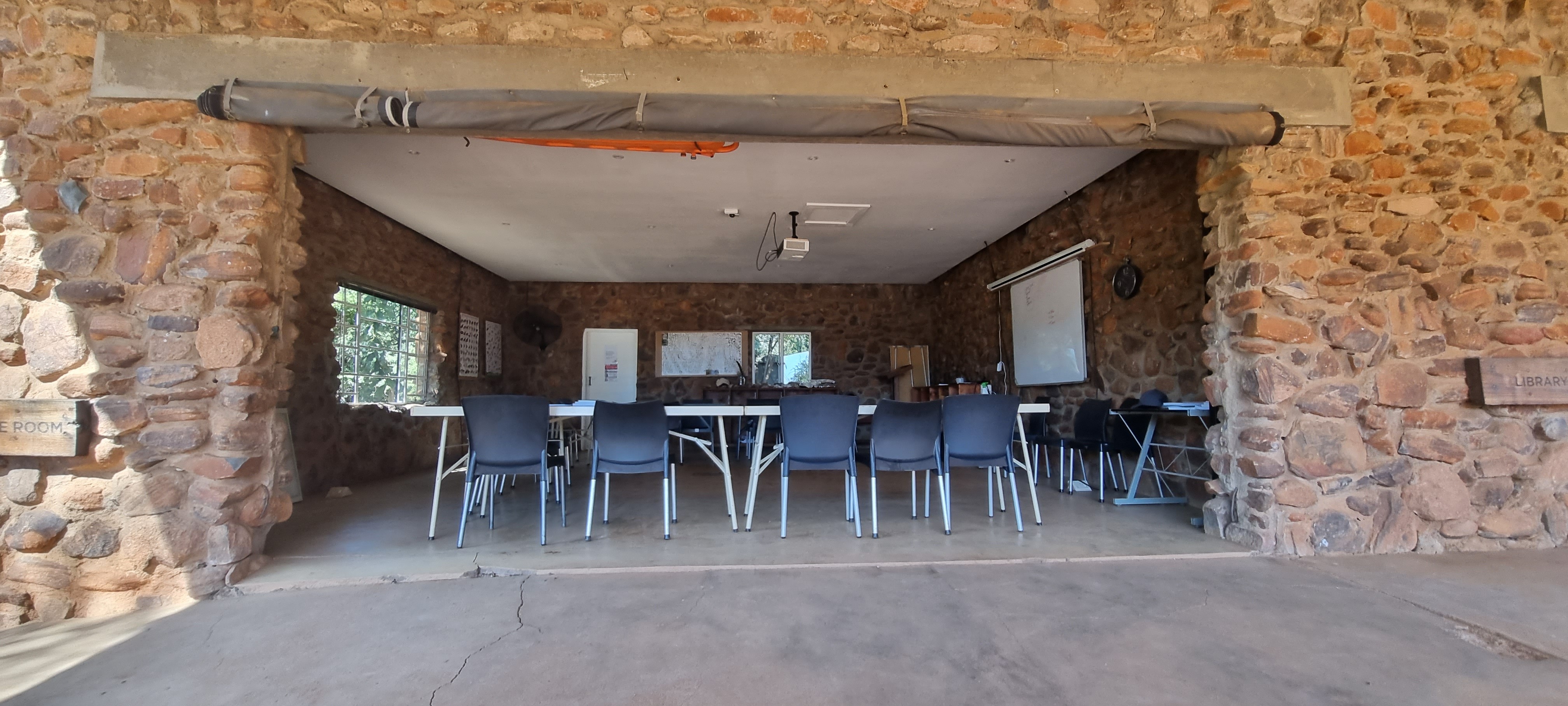
A short sequence from NJ More Field Guide College: classroom work, vehicle practice, tracking, signs on the ground, and camera craft.

In the classroom, classroom
01 / 14
Classroom

In the classroom

The classroom side of the course: theory, species knowledge and the less romantic work that sits behind good decisions in the field.

Field note: Maps, safety, behaviour, ecology and guiding standards before the vehicle moves.

Photo note: Better photographs start before the camera comes up, with knowledge of place and behaviour.

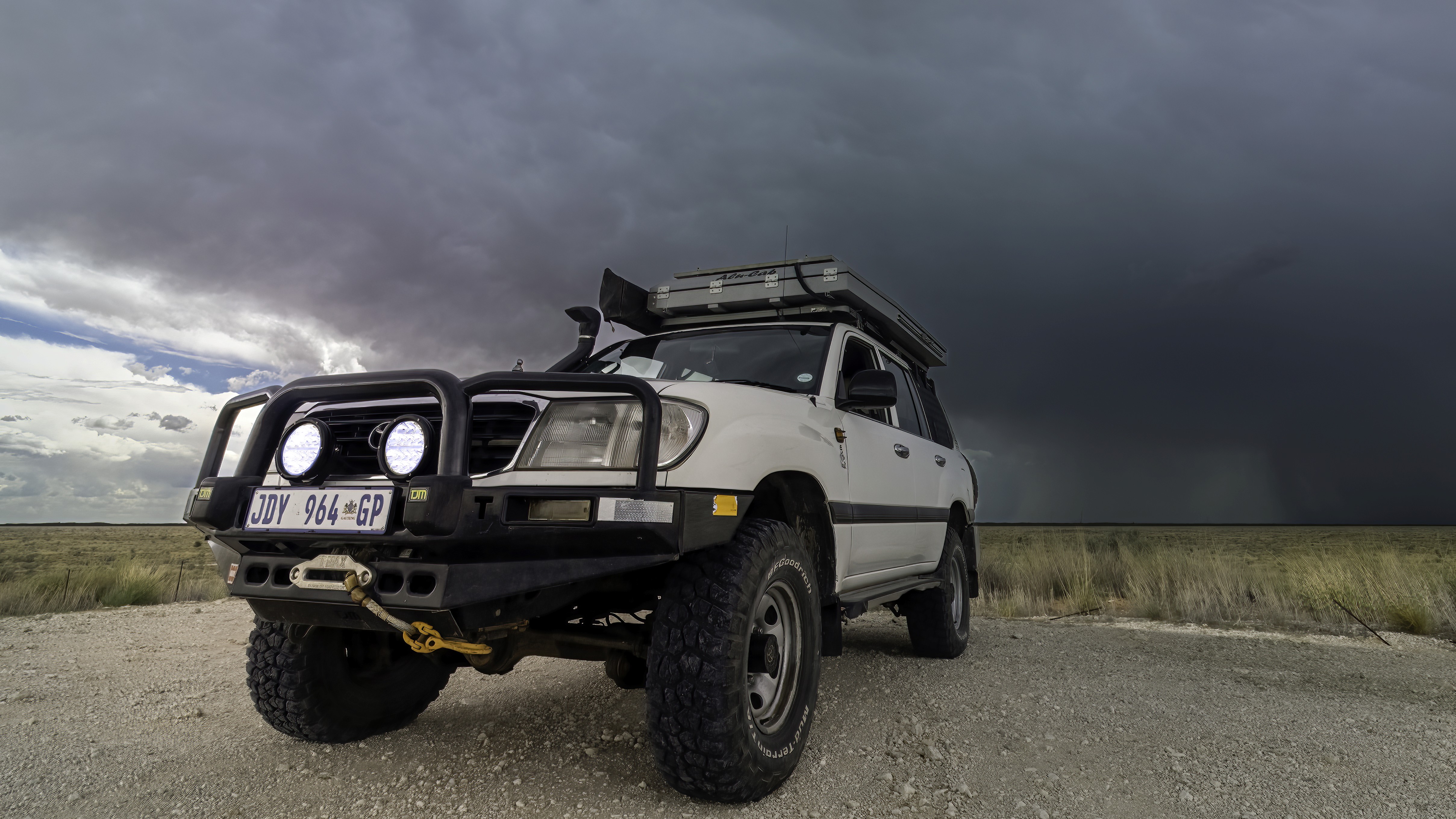
A Toyota Land Cruiser fitted for expedition travel, under a storm sky.

A photographic expedition across Africa.

A photographic expedition across Africa.

A photographic expedition across Africa.

From the end of 2022 I drove southern and eastern Africa to photograph its national parks: South Africa, Namibia, Botswana, Zimbabwe, Zambia, Malawi and Mozambique. Kgalagadi, Sossusvlei, Palmwag, Etosha, the Central Kalahari, Moremi, Chobe, Lower Zambezi, South Luangwa, Nyika, Gorongosa.

A month volunteering across three Naankuse sites in Namibia. Camera traps and fence patrols, tracking collared elephants at the main reserve and lions on foot at Timbila, survey work with a PhD student on ground being assessed for a wild dog release. Slower and less romantic than it sounds, and the first time I understood how much of conservation is maintenance: counting, checking, mending, repeating.

Most of it I camped, a lot of it unfenced, out of a 1999 Toyota Land Cruiser 105 set up to live in.

Why Botswana.

Why Botswana.

Why Botswana.

Plenty of places rival it. Lower Zambezi sits against a dramatic escarpment. South Luangwa has a remarkable density of leopards. Kruger is more accessible than any of them. The Serengeti is still one of my favourite places on earth.

The Delta is different in kind rather than degree. The most extraordinary wetland system on earth, green in the middle of a desert, and the water brings everything to it. Game in numbers, and the birding specials that only come with permanent water. A whole set of specialists in one place.

And Maun sits on the edge of it, so you are in the Delta quickly rather than after a long haul.

Plenty of places rival it. Lower Zambezi sits against a dramatic escarpment. South Luangwa has a remarkable density of leopards. Kruger is more accessible than any of them. The Serengeti is still one of my favourite places on earth.

The Delta is different in kind rather than degree. The most extraordinary wetland system on earth, green in the middle of a desert, and the water brings everything to it. Game in numbers, and the birding specials that only come with permanent water. A whole set of specialists in one place.

And Maun sits on the edge of it, so you are in the Delta quickly rather than after a long haul.

What actually changed me.

What actually changed me.

What actually changed me.

I expected the answer to be wildlife. It was not. It was people: the ones I shared a fire with whose names I have long since lost, the locals at every campsite, the guides who taught me things I had no business being shown.

That is why this trip is hosted rather than simply sold. You will know who is looking after you, and you will know them by name by the second evening.

An African skimmer in flight low over open water.

The African Skimmer

The bird behind the name.

The bird behind the name.

The bird behind the name.

The African Skimmer is not an easy bird. You have to know which water suits it, you have to go out of your way to get there, and it flies fast and low, which makes it hard to photograph even once you have found one.

Field knowledge, local knowledge, and being far enough into the Delta to be in the right place at all. That is the whole idea of this trip, so it seemed like the right bird to name it after.

You find them on the wider, sandier channels, deep in the Delta along the permanent water. Getting to one takes knowing where to look and being willing to go there.

Enquire

Come and see it for yourself.

Two departures in 2027: 5 to 12 June and 17 to 24 July. Tell me a little about yourself and I will reply personally, usually the same day.