Why June and July in the Okavango Delta
Rain in Angola. Winter in Moremi. The slow flood pulse, the birds in the palms and the shape of a June or July day.

June and July are winter in Botswana. The mornings are cold, the ground is drying and water from Angola is working its way through the Okavango Delta. It is this combination that brings me back. The season has a daily rhythm as well as an annual one.
Where the water begins
The story begins in the Angolan highlands, in remote country of woodland, source lakes and broad river valleys. The river’s headwaters lie around 1,700 to 1,800 metres above sea level. The main rains fall roughly between October and April, months before much of that water spreads across the Delta.
Two main rivers carry it south: the Cubango to the west and the Cuito to the east. The Cubango responds more quickly to rain. Along the Cuito, lakes, peatlands and sandy valleys store water and release it more gradually. They join near the Namibian border, continuing as the river known as the Kavango or Okavango.
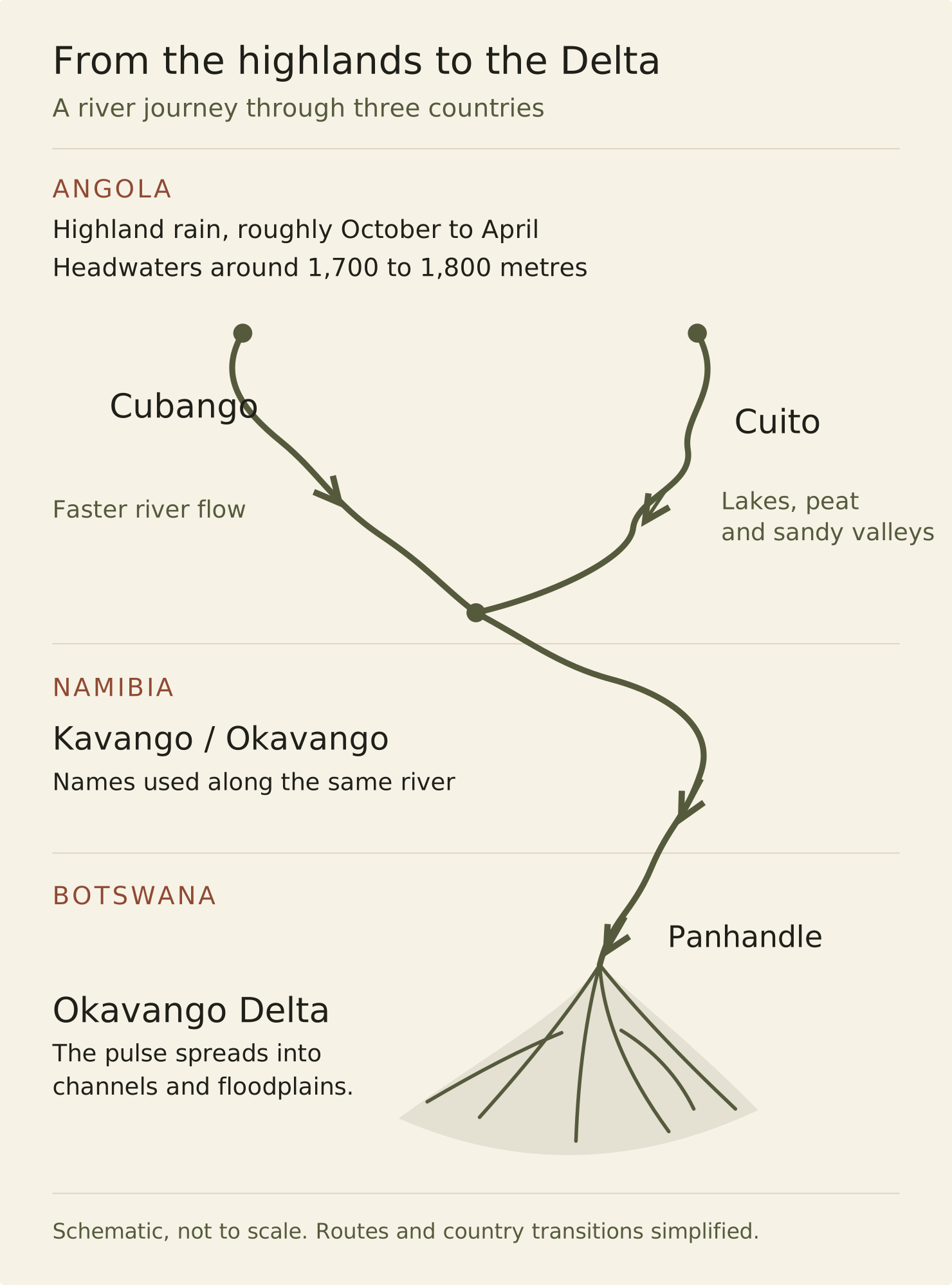
Open the river diagram at full size
The flood pulse
The river enters Botswana through the Panhandle, then spreads into channels, permanent swamps and seasonal floodplains. This annual rise and fall is known as the flood pulse. Its peak can take around five months to progress from the upper Delta to its outer fingers. That describes the advancing pulse, rather than a fixed journey time for every drop of water.
By the time water reaches those outer floodplains, Botswana’s own summer rains are long over. Dry land and spreading water sit alongside one another. The timing and reach vary with the year and the channel, so June and July do not bring one uniform water level across the Delta.
In Moremi, that changing balance helps shape the week. The camp moves once, midway through our six nights there. The second site is chosen for different habitat characteristics from the first, keeping us within Moremi while changing the country around us.
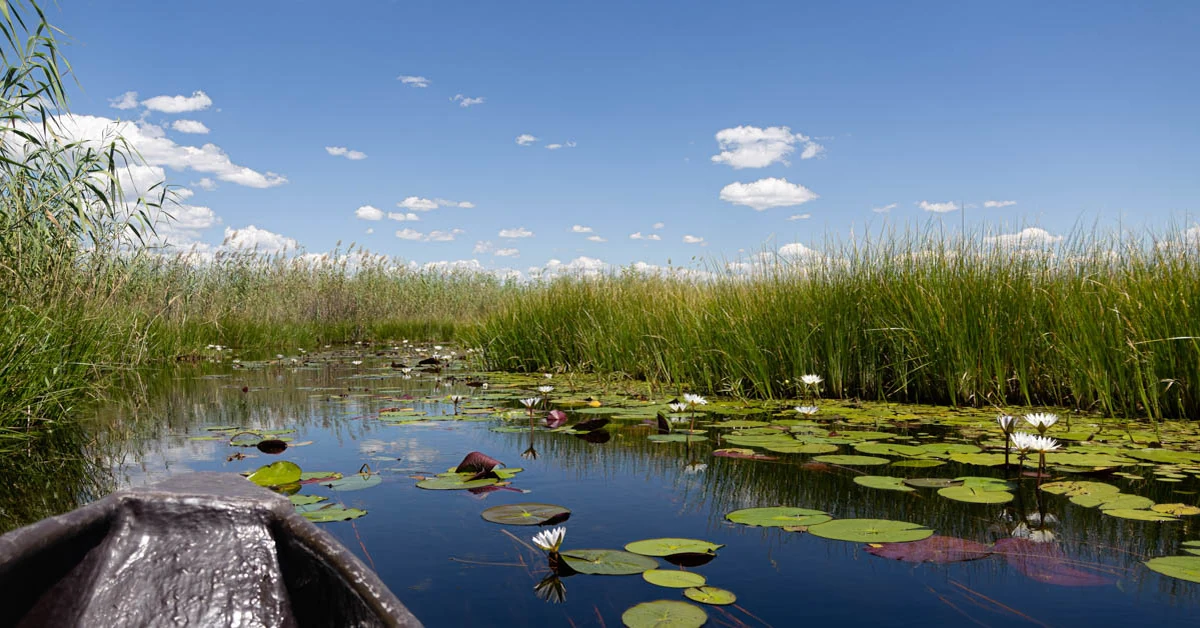
What I’ve seen around the water
I’ve seen giraffes, elephants, waterbuck and red lechwe crossing channels in the Delta. At the Boteti River, I’ve seen mass gatherings of zebra.
The palms have their own birds
The fan palms are part of the Delta’s outline, but they are also nesting habitat. African palm swifts attach small feather nests beneath the hanging fronds. Saliva binds the nest together and holds the eggs in place. A palm grove is worth looking at above the trunks as well as between them.
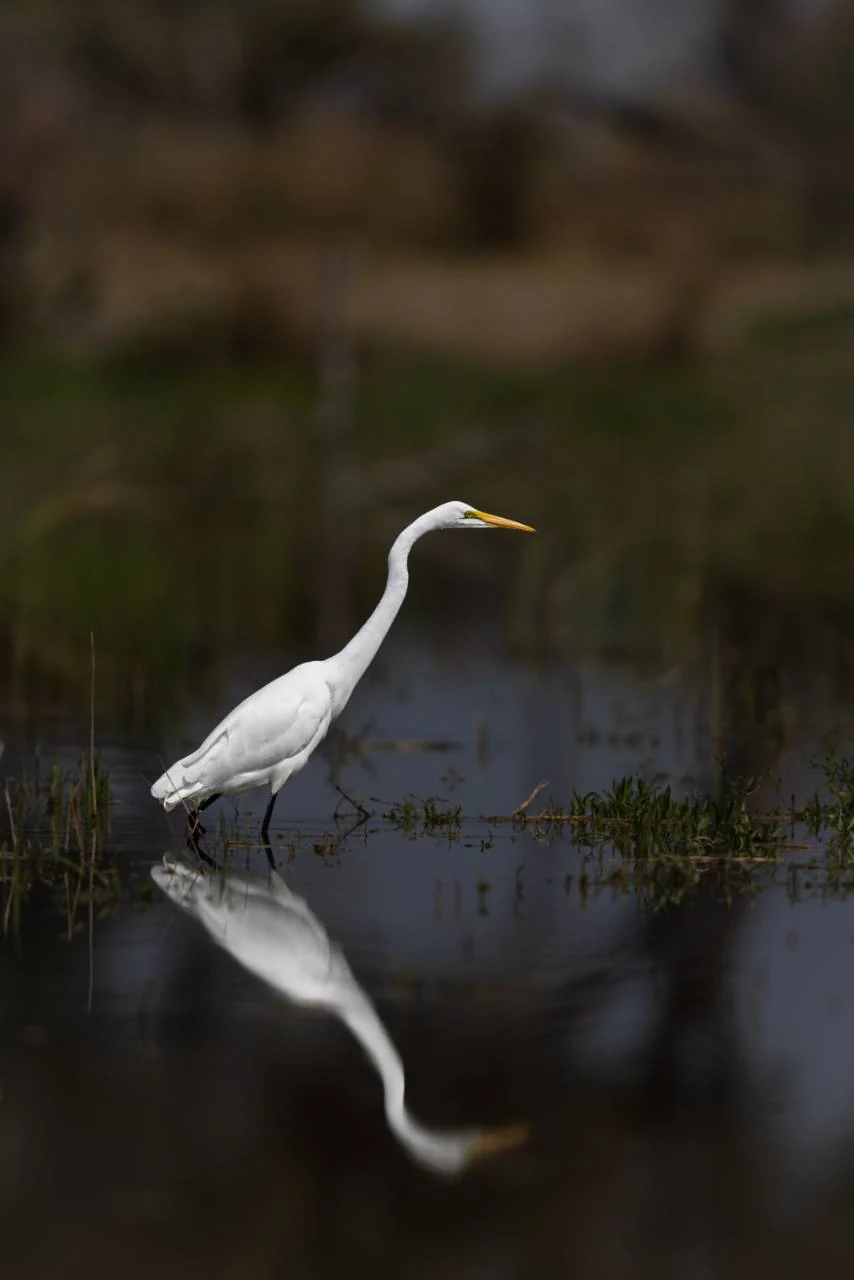
I’ve seen Pel’s fishing owl in the Delta. This large, ginger coloured owl roosts in riverside cover during the day and hunts fish after dark. The wooded margins of channels and backwaters give it cover and hunting perches. It adds another reason to look carefully into the trees.
When wild dogs den
The cool months of June to August are the usual denning season for wild dogs in northern Botswana. Young pups remain at a den while adults go out to hunt and return to feed them and their mother. The pack’s movements become more concentrated around that base. It is a different pattern from the wide ranging travel of the rest of the year.
The den may be an old aardvark hole. Returning adults regurgitate food for the pups and their mother. Feeding those young dogs shapes the pack’s daily routine for weeks.

Joe and Rocky, in their own words
The guides notice things that a seasonal summary cannot tell you. In these short interview excerpts, Joe talks about reading the water and Rocky describes Verreaux’s eagle owl, including its very recognisable pink eyelids.
Joe reads the water
Disturbed silt and bubbles can tell Joe about recent activity in a channel. He explains how he learnt to read those signs from his parents.
JOE, LICENSED BOTSWANA GUIDE
Rocky on Verreaux’s eagle owl
Rocky describes where it spends the day, and the pink eyelids that help identify it.
Cold starts, warmer afternoons
There is plenty of hot tea, coffee and hot chocolate for the early starts. Bring a warm coat, a hat and gloves. Travelling in the open vehicle will feel cold, even when the day ahead turns out to be warm. Blankets are provided in the vehicle too.
Wear layers you can take off. By the afternoon it can be 25°C or warmer, and the clothes that were sensible at dawn can feel quite excessive. You might start in a thermal layer and a coat, then find yourself in shorts and a short sleeve top later in the day.
The warmth builds through the day, then falls away quickly towards evening. Those dusty sunsets can hold your attention while the temperature drops around you. Keep the warmer layers within reach for the drive back.
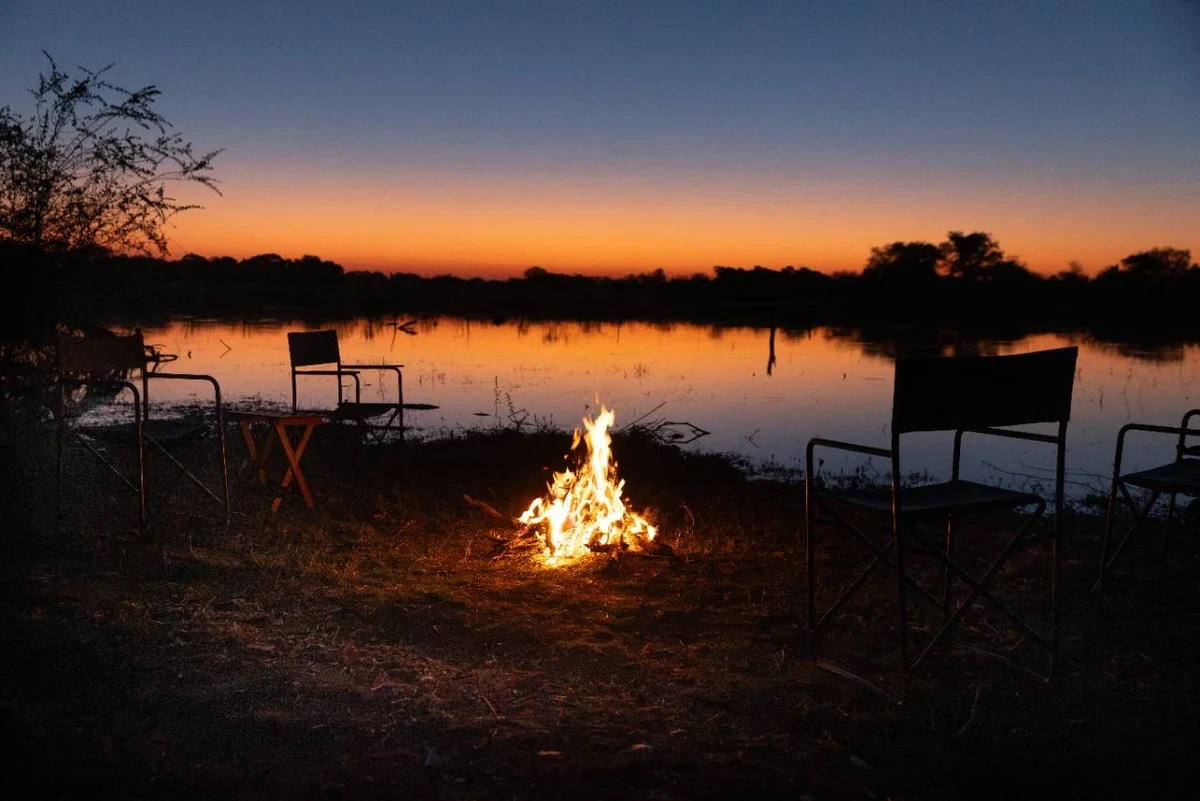
Back round the fire
After dark, the fire becomes the main attraction. The heat is entirely welcome by then. There are extra blankets for the night as well, so pack for the cold without feeling you have to bring half the bedding cupboard.
The 2027 departures
The departures run from 5 to 12 June and 17 to 24 July 2027. Each is seven nights in Botswana, with six inside Moremi and a maximum of four guests. I host the photography; Joe and Rocky are the licensed Botswana guides.
For the shape of the week, read The Safari. The Photography page explains how the photographic hosting works.